Sunday, March 19, 2017

Spotlight: West Virginia - Harpers Ferry NHP

Spotlight: With a population of 286 (2010 census), you wouldn't think that Harpers Ferry would have a storied past. However, due to its strategic location at the confluence of the Potomac and Shenandoah rivers, Harpers Ferry played an important role in our nation's history during the mid 1800's. What started as a ferry stop across the Potomac River grew into a small town. George Washington, who was familiar with the area, proposed it as the location of the United States Armory and Arsenal. Between 1801-1861, the armory produced more than 600,000 muskets, rifles and pistols. It's importance grew with the construction of the C&O Canal (linking it with Washington DC) and a year later the B&O Railroad (think Monopoly).

     On Oct. 16, 1859, John Brown led a group of 21 abolitionists on a raid of the Harpers Ferry Arsenal in hopes of using the weapons to arm a Slave revolt in the South. When news of the raid reached nearby Charles Town, the local militia pinned down Brown's forces inside the engine house which was adjacent to the armory. A force of 86 marines was sent up from Washington DC under the command of Army Lieutenant Colonel Robert E. Lee (assigned as impromptu commander while on leave). When negotiations failed, they stormed "John Brown's Fort" and captured most of the raiders. John Brown was tried for treason, convicted and hung in Charles Town. The incident, which stirred up bitter feelings in both the North and the South, served as one of the catalysts of the Civil War.
      During the Civil War, possession of Harpers Ferry changed 8 times, suffering critical damage each time forces plunged through the area invading enemy territory. The most extensive damage to the town occurred during the Battle of Harpers Ferry which was fought between Sept. 13-15, 1862. It ended with the surrender of 12,419 Federal troops - the largest single surrender of U.S. troops until the Battle of Bataan during WWII. Following the war, the U.S. government decided not to rebuild the armory, causing the town to lose much of its importance as a linchpin between the North and South.
Civil War relics
Location: Harpers Ferry is located at the confluence of 3 states: West Virginia, Maryland & Virginia. The main parking lot, Visitor Center and shuttle bus stop to Lower Town are located at 171 Shoreline Drive, Harpers Ferry, West Virginia.

Cost: $10/vehicle (excludes groups of 7+); $5/person (on foot or bicycle)

Time: The Park is open from 9 am - 5 pm daily; unless you are there for one of the special events, you will probably spend about 1-3 hours here.

Description: John Brown's Fort was erected in 1848 as the Armory's fire engine and guard house. John Brown and his followers barricaded themselves in this building during their 1859 raid of the Armory. During the Civil War, the building served various functions as a prison, a powder magazine, and a quartermaster's supply house. It was dismantled and shipped to Chicago for the World's Colombian Exposition before being shipped back several years later, but rebuilt on a different site. It was purchased by Storer College, which used it as a museum. Eventually, it was purchased by the NPS and moved rebuilt 150 east of its original location (which is covered by a railroad embankment).
John Brown's Fort

     The Lockwood House was originally constructed as the home of the Armory Paymaster in 1848. During the Civil War it was used as a hospital, and then as the headquarters of Brig. General Henry Lockwood as well as Major General Philip Sheridan. It served other purposes as well - a bivouac, a prison, and even a ballroom (Thanksgiving 1863). After the war, it was used as a school for former slaves, and eventually became the nucleus of Storer College.
     Loudoun Heights are located on the second highest mountain at Harpers Ferry. In 1861, Col. Thomas Jackson ordered three infantry blockhouses built on the summit. During the Battle of Harpers Ferry (Sept. 1862), the Confederates were able to bombard the Union troops from atop the Heights while avoiding return fire.
     Maryland Heights are located on the highest mountain at Harpers Ferry. They hosted the first battle between Union and Confederate troops in Maryland. It was also the key target of southern troops in the Battle of Harpers Ferry. When Union troops were obliged to abandon its summit, the southerners were able to cut off the Union's escape route and secure the surrender of the U.S. garrison on Sept. 15. Having learned the importance of retaining the high ground the hard way, the Union later built forts on top of the mountain that played a major role in forestalling the Confederacy's third invasion of the north.
     Jefferson's Rock is located along the Appalachian Trail between Lower Town and Camp Hill. From this spot, Thomas Jefferson, traveling to Philadelphia, is said to have gazed upon the valley and declared it "perhaps one of the most stupendous scenes in nature." Visitors are not allowed to climb on the rock itself since it is unstable and is protected as a cultural resource.
     The Point refers to the confluence of the Potomac and Shenandoah rivers, which also forms the dividing lines between the three states. This was the site of the Ferry Lot Reservation which became a bustling commercial area for the growing town of Harpers Ferry. It's location became even more prosperous with the completion of the famous B&O Railroad viaduct across the Potomac River. During the Civil War, however, the bridge was blown up by Confederate troops, and the buildings were burned down by Union troops. During the war, the bridge was rebuilt and destroyed nine times before the completion of the Bollman Bridge in 1870. This bridge eventually fell victim to the great flood of 1936.

Remains of destroyed bridge
Rating: 2 1/2 stars (out of 5)

Things You Should Know: - I strongly recommend visiting during one of the many special events that occur throughout the year since it will enhance your visit. Below are links to several of the various events that will occur throughout the year.
- Harpers Ferry hosts several different Living History Event Weekends throughout the year. Visit the National Park's website calendar for specific dates.

- 2017 marks the 150th anniversary of Storer College. To see the special events marking this anniversary, click here.
- To participate in Cultural Resources Programs throughout the year, click here.
- Harpers Ferry has a variety of hikes you can take. For details, click here.
- Historic trades workshops are given on select dates.
- Harpers Ferry was a supply stop by Lewis & Clark on their famous expedition of 1803.


Nearby: Gathland State Park, Catoctin Creek Park and Nature Center, South Mountain State Park, Washington D.C.

Sunday, March 12, 2017

Spotlight: Virginia Beach - Captain Jack's Pirate Ship Adventures

Spotlight: Captain Jack's Pirate Ship Adventures is a fun, swashbuckling adventure for young families. Young buccaneers dress up in their pirate duds, add a few tattoos, eye-patches, plastic swords, etc. and join Captain Jack aboard the Lost Pearl in hunting down the treacherous Blackbeard to recover the treasure Blackbeard stole. The Lost Pearl was custom built to the dimensions of a Spanish galleon, while adhering to modern Coast Guard requirements.
Captain Jack
The Lost Pearl

Pirate Erika
Location: Captain Jack's Pirate Ship moors at 308 Mediterranean Ave. in the port of Inlet Station Marina at Virginia Beach.

Cost: $27/adult, $23/child (3-15), $25/senior (65+) or active military

Time: Approximately 75 minutes. Cruises start up in the middle of May and go through September. Since cruises are only offered on select days and times, make sure you check the schedule.

Description: While on board the cruise, the youngsters are entertained with pirate songs and games (such as the Limbo) organized by the animated pirate crew while cruising up and down the harbor.
Pirate Crew

Pirate History Lesson

The Limbo Stick (evidently a popular pirate game)
     Once they find Blackbeard, they help man the water cannons to overpower the cunning pirate with a deluge of waterworks. Once they recover the treasure chest, they each get to share the booty - plastic coins, jewelry, etc. Although some youngsters might get scared, they won't get bored. The entire cruise is packed with non-stop entertainment directed by the engaging crew; and they might even spot dolphins sailing alongside the ship.
The famous pirate Blackbeard

Battling Blackbeard with H2O cannons

Dividing up the pirate booty
Rating: 4 stars (out of 5)

Things You Should Know: - The traditional cruise is geared toward younger kids. Our girls (ages 8 & 13 at the time) were probably the two oldest kids there; but they still had fun. There are other cruises available for other target groups (such as school groups, Scouts, or the Club 21+ cruise).
- A special Fireworks Cruise is given on July 4.
- Captain Jack's boat can be rented out for birthday party excursions.
- Group rates are available for large groups.
- Plan to arrive early. We had trouble finding the designated parking area and almost missed our cruise.
- If you go to Virginia Beach from the Yorktown area, the shortest route is under the ocean. The freeway travels several miles under this branch of the Chesapeake so that you don't have to drive all the way around.

Nearby: Grommet Island Park, Virginia Aquarium & Marine Science Center, Naval Air Station Oceana, Great Dismal Swamp National Wildlife Refuge, Yorktown

Sunday, March 5, 2017

Spotlight: Virginia - Manassas (Bull Run)

Spotlight: Manassas National Battlefield Park is the site of two important Civil War battles. While the Union referred to the battles as the First and Second Battles of Bull Run, the Confederacy named them the First and Second Battles of Manassas. Although the first shots of the war were fired at Fort Sumter on April 12, 1861, the First Battle of Bull Run is considered the first major engagement between Union and Confederate troops. The battle took place on July, 21, 1861, pitting the Union troops under the command of Brigadier General Irvin McDowell against the Confederate troops under the command of Brigadier General P.G.T. Beauregard. The Union's goal was to overwhelm the Confederates, opening up a clear path to Richmond. They felt that if they could capture the Confederate capital, they could bring a quick end to the war. Both sides were initially ineffectual, hampered by a lack of cohesiveness and communication. Although the Union forces initially drove back the Confederate soldiers, reinforcements allowed the Confederates to carry the day. When Colonel Jeb Stuart led the Virginia cavalry in a charge against the massed Union troops, the rout was on. The Union soldiers fled in confusion toward the horrified bystanders who had come down from Washington to watch the battle while eating picnic lunches on the hills overlooking the battlefield. It was during this battle that Confederate Colonel Thomas Jackson earned the nickname "Stonewall."

     The Second Battle of Manassas was fought from August 28-30, 1862. After General Stonewall Jackson and his troops torched Union supplies at Manassas Junction, he was pursued by Gen. John Pope. Jackson's troops attacked a division of Union forces at Brawner Farm on the evening of Aug. 28th. Trying to keep the Confederate forces from escaping, Gen. Pope attacked Jackson's position throughout the day on Aug. 29. Although several of the attacks pierced Jackson's line, each one was eventually repulsed. Gen. Robert E. Lee arrived with General Longstreet's command on the 29th, blocking the arrival of Union reinforcements under the command of Fitz John Porter. On Aug. 30th, Pope continued his attempts to break the Confederate line. This time, however, Lee and Longstreet launched a major counterattack. The counterattack stalled after Union forces mounted a staunch defense on Chinn Ridge, buying Pope enough time to shift enough troops onto Henry Hill and stave of disaster. After dark, Pope's forces retreated, ending the battle, yet another victory for the Confederacy.
Monument to honor those who died at Manassas
Location: Manassas National Battlefield Park is located at 6511 Sudley Rd. in Manassas, VA.

Cost: free, but donations are accepted

Time: The battlefield is open from dawn to dusk. The Henry Hill Visitor Center is open from 8:30 - 5:00. Plan on spending 1-3 hours depending on your level of interest.

Description: Guided tours of the battlefield start at the Henry Hill Visitor Center. Tours alternate between sites from First Manassas and Second Manassas. Even without an official tour, visitors can explore the battlefields at their leisure, reading the interpretive signs along the way.

     The current Brawner Farmhouse doesn't appear to be the one that was there during the Civil War. Archaeologists have discovered the remains of an older building underneath the current one, which is probably the one that existed at the time of the war. Nevertheless, the current structure underwent heavy restoration to restore it to its early 1900's appearance. Inside, the house is used as an interpretive center.
Brawner Farmhouse
     The Stone House was built in 1848 as a stop on the Fauquier and Alexandria Turnpike. Due to its strategic location, it played a role in both battles, including being used as a hospital for northern troops. It underwent reconstruction in the 1960's to restore it to its Civil War era appearance and is used as an interpretive center for visitors to the park.
The Stone House
     The Stone Bridge was originally built in 1825 to serve travelers along the Fauquier and Alexandria Turnpike. It played a role in both battles since it was the easiest way to cross the stream. In the First Battle of Manassas, Union troops forded across the stream since it was rumored that the bridge had been rigged with explosives. The Confederate forces used it throughout 1861, but blew it up in 1862 after evacuating their winter camps in Centreville and Manassas. A temporary wooden bridge was built by Union troops in 1862, but eventually a new (similar) stone bridge was constructed on the spot in 1884.

Rating: 3 stars (out of 5) - although potentially higher since we were limited on time

Things You Should Know: - Living history actors perform infantry and artillery demonstrations at Chinn Ridge on select dates throughout the year including Memorial Day and the anniversaries of the battles.
- Brawner Farm Interpretive Center and the Stone House are closed in the winter.
- When you see a statue of a mounted commander on a battlefield, the horse's legs will indicate what happened to the rider. If both legs are in the air, the rider died in battle. If one leg is in the air, then he died of wounds suffered in the battle. If all legs are on the ground, the rider survived the battle.

Nearby: Ben Lomond Historic Site, Fountainhead Regional Park, Shenandoah National Park, Arlington National Cemetery

Sunday, February 26, 2017

Travel Tip #50 - Renew friendships

     One thing we've tried to do on our big out-of-state trips is visit friends and family we haven't seen for a while. On our trip to Virginia, we reached out to some friends who we hadn't seen since college. We'd kept in contact through Christmas cards and Facebook, but that isn't the same as actually getting to visit with them in person. They had lived in various parts of the country as well as in Europe for several years before returning to the U.S. and buying a home in Virginia near Washington D.C. They kindly invited us to stay at their home for a few nights while we visited the D.C. area, and showed us where to catch the metrolink so that we didn't have to worry about parking in the city. They also had some great advice on visiting a site we'd never even heard of. Not only were we able to renew our friendship with them, our oldest daughter struck up a friendship with one of their daughters. Also, one of our youngest daughter's favorite activities was chasing fireflies in their backyard.
     Once again, on our recent trip to Texas, I was able to see a high school buddy that I hadn't seen since the summer after we graduated. We had lost track of each other for many years, but reconnected on Facebook. When we visited San Antonio, we made plans to meet him and his family at a restaurant. We had never met each others' families, so it was fun to meet them, catch up on what was going on in our lives, and reminisce about fond memories from our teenage years.
     So, next time you are planning a trip, take a moment to peruse your address book and see if you can reconnect with someone. Not only can you get some good advice regarding places to visit, places to eat, and places to avoid, it can strengthen your friendship and provide some of the best memories once the trip is over.

Monday, February 20, 2017

Spotlight: Virginia - Mount Vernon

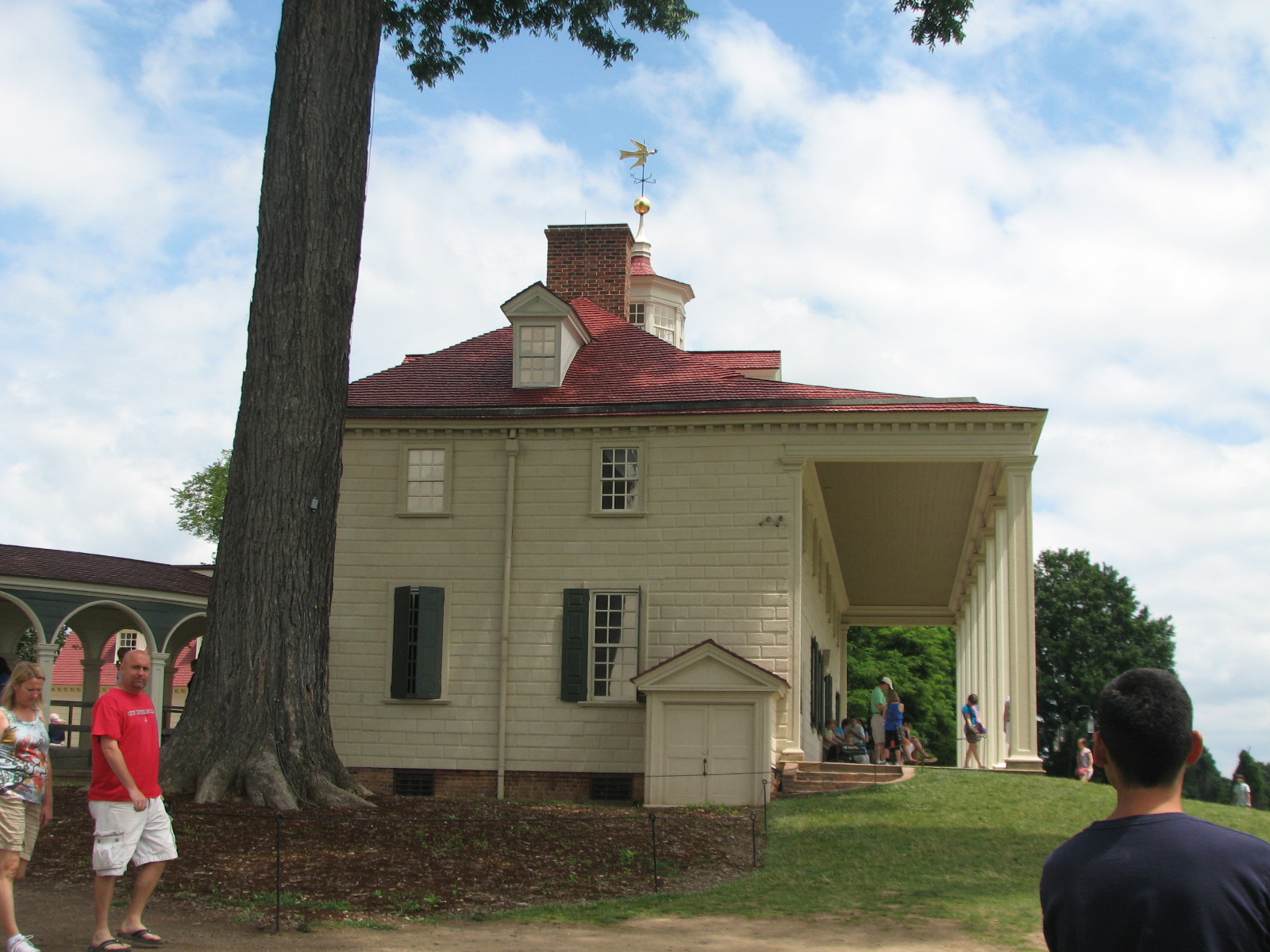
Spotlight: In the antebellum south, plantation owners lovingly gave names to their beautiful plantations. Although George Washington is more famous for his roles as general of the Colonial Army and first President of the United States, he was also a plantation owner. His plantation was named Mount Vernon by its previous owner, his brother Lawrence who named it after his commanding officer. The mansion began as a modest one and one-half story farmhouse built in 1735 by Augustine Washington, George's father. It was later inherited by George's half-brother Lawrence. When Lawrence died, ownership of the plantation eventually passed on to George, who began residing there in 1754. Over the next 45 years, George slowly added on the Mansion, supervising each renovation and eventually expanding it to 21 rooms.
      Following Washington's death in 1799, the estate began to deteriorate due to decreased revenues. It was saved from ruin by The Mount Vernon Ladies' Association who acquired and restored the historic buildings. It was designated a National Historic Monument in 1960.

Location: Mount Vernon is located at 3200 Mount Vernon Highway, Mt. Vernon, VA on the shores of the Potomac River, just south of Washington D.C.

Cost: Adults (12+): $20, Seniors (62+): $19, Youth (6-11): $10, Children (0-5): free

Time: Open from 9:00-4:00 (November-March), 9:00-5:00 (April-October); we planned on only staying for 2-3 hours, but ended up staying 6 1/2 hours. You could easily spend a full day here.

Description: After the death of his brother, Lawrence, George took up residence in the Mansion at Mount Vernon. The 21 rooms are painted in vibrant colors and adorned with elegant furnishings from the era. Visitors can walk through the first and second floors and listen to guides who give interesting details about the house and its residents. The distinctive cupola on top of the mansion not only provided a fabulous view of the estate and river, it also served as a natural air conditioning by siphoning hot air out through the open windows. The shaded piazza was also unique for that era, allowing the family to take tea outside on hot summer days.
     Many of the essential household operations took place in the many outbuildings located around the Mansion, including: the Kitchen, the Blacksmith Shop, the Spinning House, the Greenhouse, the Smokehouse, the Stables, and more.

Spinning House

Blacksmith Shop
     Surrounding the Mansion and outbuildings are several fabulous gardens. Some of the gardens were to add beauty to the grounds. Others served different purposes including growing fruits, vegetables, herbs and spices. They also allowed Washington to test out the viability of new species of plants in the humid Virginia climate. Visitors can also explore the wooded landscape of the 1/4 mile forest trail.
     Around the property, visitors can see the various animals that Washington raised on his grounds: horses, donkeys, cows, hogs, sheep, turkeys, chickens, mules and oxen.
     Washington was originally buried in the Old Tomb near the Mansion. However, prior to his death, he had chosen a site for the New Tomb to be constructed. Once it was completed, the remains of George, his wife Martha, and other family members were moved to the new site. Near the New Tomb is a Slave Memorial and Burial Ground for the unmarked graves of the many slaves and free blacks that lived, worked, and died at Mount Vernon.

     From April to October, visitors can explore the reconstructed Pioneer Farm where Washington experimented with new agricultural ideas such as crop rotation, fertilizers, plowing practices, etc. You can visit the replica 16-sided Treading Barn and the reconstructed slave cabin and watch workers in period dress perform labors that were common during the late 1700's.

     One of Washington's most successful enterprises was his fishery. Visitors can walk onto the reconstructed wharf where they can access the sightseeing cruise from April to October.
     The Donald W. Reynolds Museum and Education Center traces Washington's life through a variety of multimedia presentations that explore his childhood, his adventures on the American frontier, his role in the Revolutionary War, his presidency, and of course his family life at Mount Vernon. The museum displays more than 500 objects that were part of the Washingtons' daily lives.

Photographic proof of the Cherry Tree incident

Washington's sword
     The Robert H. and Clarice Smith Auditorium shows four different movies included in the price of admission: The Winter Patriots, Yorktown: Now or Never, Saving Mount Vernon, and Mount Vernon in Virginia.
     Your general admission ticket also gives you access to the nearby Distillery and Gristmill, both of which are still functioning just as they did at the end of the 18th century.
     The Mount Vernon Inn Restaurant serves classic American dishes common during the late 18th century, and served by waiters in period dress in a colonial setting. There is also a food court with quicker, modern options. We tried the Mount Vernon Inn Restaurant and enjoyed it immensely.
our waiter at the Mount Vernon Inn Restaurant
Rating: 5 stars (out of 5)

Things You Should Know: - Parking is free. You can also come by rail from Washington DC. Take Metrorail's Yellow Line to Huntington Station. Exit at the lower level of the station (Huntington Avenue) to catch a Fairfax Connector bus to Mount Vernon. Board the Fairfax Connector Bus #101, the Fort Hunt Line, for a 20-minute trip to Mount Vernon's entrance gate.
- Timed tickets to the Mansion tour are available on a first-come, first-serve basis.
- Daily add-on tours include: the Sightseeing Cruise ($11), National Treasure Tour ($7), Gardens & Groves Tour ($4), the Enslaved People of Mt. Vernon Tour ($4), and the Audio Tour ($6). To engage our daughters more, we did the National Treasure Tour (based on the Hollywood movie) and loved it! It is the only tour that takes you under the mansion to the subterranean cellar.
Cellar door entrance

Ice House entrance

Erika hiding where Ben Gates entered the party
- On the tour we learned that although there is no secret passage in the cellar; there was one from the bottom of the Ice House to the river at the base of the hill. When the script writers learned this, they got so excited, they modified the script to include a secret passage.
- Weekend add-on tours include: Dinner for the Washingtons ($7), Through My Eyes Character Tour ($7), and the All the President's Pups Walking Tour ($7)
- You get a 10% discount on online ticket purchases from the Mt. Vernon website.
- If you come with kids, download the Agent 711 Spy Adventure app which allows them to use their spy skills as they explore the grounds.

Nearby: Piscataway Park, Fort Washington Park, Woodlawn & Frank Lloyd Wright's Pope-Leighey House, Gunston Hall

Sunday, February 12, 2017

Spotlight: Virginia - Historic Yorktown

Spotlight: In the fall of 1781, a combined army of colonial troops, led by General George Washington, and French troops under the command of General Comte de Rochambeau laid siege to British troops under the command of Lord General Charles Cornwallis at the small town of Yorktown. General Cornwallis had led his troops to the Yorktown peninsula in hopes of getting some much needed rest. Meanwhile Gen. Washington and his troops were preparing for a major offensive against New York when word reached him that the French fleet was headed to Virginia. Recognizing the opportunity to catch the British unawares, Washington led every available soldier down to Virginia, where he and his troops penned the British troops in by land while the French fleet prevented their escape by sea. Cornwallis requested help from the British forces in New York, but the fleet sent under the command of Admiral Graves was both outnumbered and outmaneuvered by French Admiral De Grasse. The two day naval battle ended with the British fleeing back to New York. In the meantime, Washington and his troops encircled the 9,000 British troops at Yorktown. For three weeks, the Colonial army, fortified by heavy French cannon, bombarded the British troops. However, British Redoubts #9 and #10 were keeping the cannons out of range of the city. On the moonless night of Oct. 14, the American army attacked Redoubt #10 while tasking the French with taking Redoubt #9. Both attacks succeeded, allowing the Colonial army to move in the heavy artillery. A British counterattack on Oct. 15 succeeded in spiking 6 guns, but failed to break through. Next, Cornwallis attempted to sneak off the peninsula by crossing the river in boats; but they were scattered in a storm. Finally, on Oct. 17, 1781, Lord Cornwallis waved the white flag of surrender. After two days of negotiations, Cornwallis reluctantly signed the surrender documents. Too embarrassed to deliver his sword to General Washington in person, he sent his second-in-command. Rather than accept the proffered offering, Washington sent the man to his second-in-command to accept it. Although the battle didn't officially end the war, it was the last major engagement of the American Revolution, successfully paving the way for the creation of a new country, the United States of America.
Yorktown today
Location: The Yorktown Battlefield Visitor Center is located at 1000 Colonial Parkway, Yorktown.

Cost: $7 per adult; 4-site ticket to Historic Jamestowne, Jamestown Settlement, Yorktown Battlefield and Yorktown Victory Center: $37/adult, $25/youth (13-15), and $14/child (6-12) can be purchased in Jamestown.

Time: The Visitor Center is open from 9:00 am - 5:00 pm. Park grounds are closed at sunset. Plan on spending between 2-5 hours exploring the Visitor Center and battlefield.

Description: Yorktown Battlefield is part of Colonial National Historical Park, run by the National Parks Service. The Visitor Center has an orientation film "Siege at Yorktown," a museum with artifacts from the battlefield, and a bookstore, as well as information on tours. On the battlefield, visitors can take a ranger-led tour of the earthworks, fields and historic buildings that played a part in the battle. Other points of interest include:
Replica cannon deck
battlefield dioramas


General Washington's command tent

battlefield artillery
- Cornwallis' Cave - While legend places Cornwallis’ headquarters here, he was actually located in a bunker near Tobacco Road.
- Moore House - Site of negotiations that led to the British surrender at Yorktown on October 19, 1781.
- Nelson House - Restored mansion of Thomas Nelson Jr., a signer of the Declaration of Independence, Governor of Virginia, and commander of the Virginia Militia during the Siege of Yorktown. 
- Poor Potter Archaeological Site - Described as a “poor potter” by Royal Governor William Gooch in 1732, William Rogers actually operated a large-scale pottery in Yorktown from 1720-1745 in violation of English trade laws.
- Yorktown Victory Monument - Commissioned by the Continental Congress in 1781 to commemorate the great victory at Yorktown, this monument was constructed between 1881 and 1884.
Victory Monument
Rating: 4 stars (out of 5)

Things You Should Know: - The battlefield park is closed on Thanksgiving, Christmas & New Years Day.
- The ticket to Colonial National Park sold at the Yorktown Visitor Center is only good for designated National Park sites at Yorktown and Jamestown. The 4-site ticket is not sold at Yorktown Visitor Center.

Nearby: Riverwalk Landing Marina, American Revolution Museum at Yorktown, Colonial Williamsburg, Historic Jamestown

Monday, February 6, 2017

Spotlight: Virginia - Historic Jamestowne

Spotlight: Jamestown was the first permanent English colony in the Americas. It was established on May 14, 1607 as James Fort by the Virginia Company of London. Although the Paspahegh Tribe initially welcomed the settlers and saved the colony from starvation, relations soon deteriorated into warfare. During the "Starving Time" (1609-1610), about 80% of the colonists perished, which led to the temporary abandonment of the settlement. It was quickly resettled after the arrival of a relief fleet on June 10, 1610 - celebrated as the Day of Providence. However, the arrival of the fleet led to renewed conflict between the settlers and the natives. It wasn't until the English captured Chief Wahunsenacawh's daughter, Pocahontas, that a peace treaty was finally signed. Pocahontas eventually married one of the English settlers, John Rolfe, helping solidify the uneasy peace between the settlers and the natives. Unfortunately, Pocahontas became sick on a goodwill trip to England, and died soon after. When her father also passed away, leadership of the tribe fell upon her brother, Chief Opechancanough. For more than two decades, he sought to expel the English from the Powhatan lands. He was eventually captured and killed, leading the the decline and eventual demise of the Powhatan Nation. Jamestown served as the capital of Virginia from 1616-1699, at which time the capital was transferred to Williamsburg.
     Today, Jamestown forms one corner of what is known as the Historical Triangle (together with Williamsburg and Yorktown) and is comprised of two parts. Historic Jamestowne is an archaeological site on the island where the settlement actually existed, and is co-run by the National Parks System as part of the Colonial National Historical Park. Jamestown Settlement is a living history interpretive site operated by the Jamestown Yorktown Foundation.

Location: Historic Jamestowne is located at 1368 Colonial Pkwy on Jamestown Island on the shores of the James River about 50+ miles southeast of Richmond.

Cost: Historic Jamestowne: $14/adult (only $5 for NPS/PV passholders); active military, access pass holders, and children under 15 are free. A 4-site ticket to Historic Jamestowne, Jamestown Settlement, Yorktown Battlefield and Yorktown Victory Center: $37/adult, $25/youth (13-15), and $14/child (6-12).

Time: Historic Jamestowne is open from 8:30 am - 5:00 pm daily.

Description: Historic Jamestowne is principally an ongoing archaeological site. The Visitor Center shows an immersive “theater in the round” orientation film and exhibits galleries highlighting the history of Jamestown Island from prehistoric times to the present, stretching back 15,000 years. A giant map features “The Atlantic World in 1607.” Of the nearly 2 million artifacts uncovered by National Park Service archaeologists working at Jamestown since 1930's, over 1,000 are on display in the Visitor Center. The artifacts and accompanying exhibit texts relate information about the contributions made by the three major cultures that created the Jamestown story: Virginia Indian, European, and African.  This gallery helps tell the story of Jamestown’s growth into James City in the decades after the fort was dismantled.
     The Association for the Preservation of Virginia Antiquities conducted archaeology around the old church foundations and reconstructed a church in time for the 300th anniversary of the settlement. The 1907 Memorial Church was designed by Boston architects Edmund Wheelwright and Ralph Adams Cram. The church was modeled after St. Luke’s Church in Smithfield and used bricks from two old buildings in Hampton, VA. Glass panels in the floor allow visitors to see the brick foundations of the 17th-century churches, including the one in which the colonists met in 1619 for the first representative assembly in English North America. The Memorial Church is adjacent to but not directly connected to the 17th-century tower. It was officially dedicated on May 13, 1908.

glassed view of original foundations
     The Voorhees Archaearium Archaeology Museum displays more than 4,000 artifacts from the colony.  Most of the displays focus on the colony's early years - particularly 1607-1624, but at least one display is dedicated to recent discoveries. Visitors learn how these artifacts were uncovered, including archaeological techniques and tools.
     New Towne is the residential area that developed eastward of James Fort. It was the heart of the new colony and grew quickly, eventually becoming known as James Cittie. When the NPS took possession of the area, their archaeological efforts focused on this area. Brick walls mark the original foundations, and visitors can explore the ruins of the Ambler House which still remain centuries later.
     Daily programs include "Archaeology in Action!" (ongoing - periodically during morning and afternoon hours) and the James Fort Education Walking Tour (11:00 am - noon daily & 2:00 - 3:00 on weekends). During the summer, they do a glassblowing exhibition which is absolutely fascinating.
archeologists in action
Rating: 3 1/2 stars (out of 5)

Things You Should Know: - Historic Jamestowne and Jamestown Settlement are two different sites run by two different groups. Tickets to each site are sold separately, but joint tickets are available.
- Historic Jamestowne is closed for Thanksgiving, Christmas, and New Years.
- The glassblowers have a shop where you can buy some of their products. My wife absolutely loves some of the pieces she purchased there.


Nearby: Colonial Williamsburg, Busch Gardens Williamsburg, Yorktown Battlefield, Yorktown Naval Weapons Station